Why this guide exists (and what to buy first)
Shopping for pants and workwear sounds simple until you’re stuck choosing between “looks great but hurts” and “feels fine but looks sloppy.” The good news is you can build a wardrobe that does both—especially if you shop by fabric, fit, and versatility rather than trends alone.
In this guide, we’ll cover three high-impact categories shoppers often search for—plus size pants for women, ladies office wear clothes, and flared pants for women—so you can make confident purchases that actually earn their space in your closet.
Start with the rules of good fit (ignore the size label)
Great style begins with fit, not the number on the tag. Two pants can share the same size and still feel totally different depending on rise, waistband construction, and fabric stretch. When you’re shopping online or in-store, use quick fit checkpoints that prevent most returns and regrets.
Here’s what to check before you commit:
- Waistband comfort: You should be able to sit without digging or gaping.
- Hip and thigh ease: Fabric shouldn’t pull into stress lines when you walk.
- Rise placement: High-rise sits at the narrowest part of your waist; mid-rise is often more forgiving for long days.
- Pocket lay: Pockets should lie flat (no flaring outward).
- Hem behavior: The leg should fall straight without twisting around your calf.
If you’re between sizes, decide what matters more: a clean waist or more room through hips and thighs. Tailors can reduce a waist more easily than they can “create” extra thigh space.
What fabrics look expensive and feel comfortable
Fabric is the silent deal-breaker. A flattering cut can still look cheap if the material wrinkles instantly, clings in the wrong spots, or loses shape by lunchtime. For trousers and workwear, prioritize materials that hold structure but still move.
Look for these fabrics while shopping:
- Cotton twill: Breathable, durable, great for everyday wear.
- Polyester-viscose blends: Drapes nicely, often wrinkle-resistant for office days.
- Ponte knit: Feels like leggings but looks tailored (excellent for long hours).
- Wool blends: Polished and warm, best for air-conditioned offices or cooler months.
- A touch of elastane 2%2%–5%5%: Improves comfort without making pants baggy after wear.
Avoid ultra-thin synthetics if you want a premium look. They often cling, shine under light, and show every crease.
The “office outfit” formula that always works
A strong work outfit is basically a simple equation: one structured base + one soft layer + one finishing detail. The trick is to choose pieces that can repeat without looking repetitive.
Try these reliable combinations:
- Tailored trousers + knit top + blazer + loafers.
- Straight pants + button-down shirt (half-tuck) + belt + minimal jewelry.
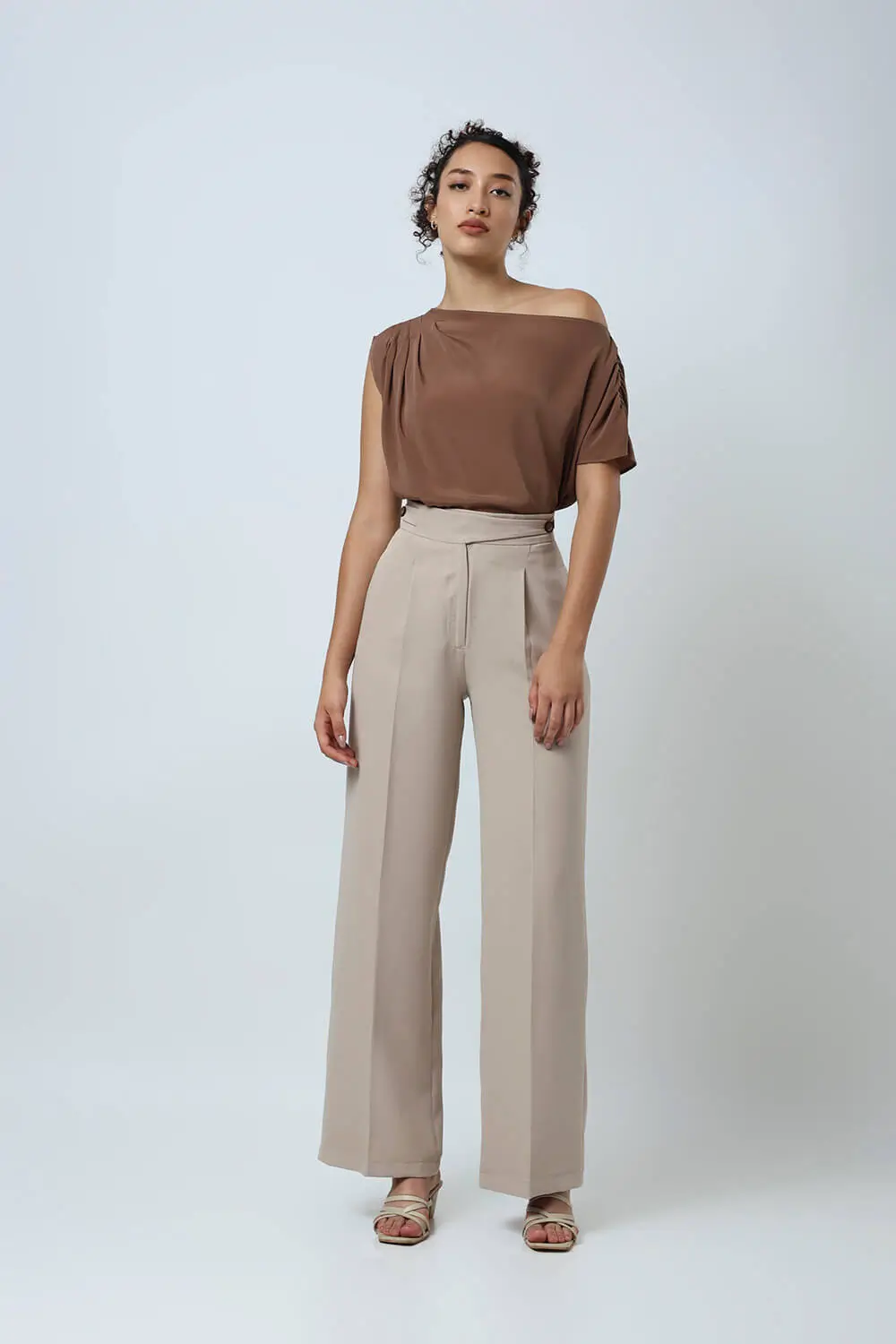
- Ankle-length trousers + tucked-in blouse + lightweight cardigan + block heels.
- Wide-leg trousers + fitted tee + cropped jacket + clean sneakers (for smart casual offices).
One detail makes a basic outfit look intentional: a belt, a watch, a crisp tote, or a shoe with structure (loafers, mules, low boots). You don’t need all of them—just one anchor.
How to shop for trousers when comfort is non-negotiable
If your day includes commuting, sitting for hours, climbing stairs, or constantly moving, comfort must be built into the garment—not “hoped for.” This is where waistband design, rise, and fabric recovery matter more than trendy cuts.
When you’re shopping, look for comfort features like:
- Part-elastic back waistbands (clean front, flexible fit).
- Flat-front construction (reduces bulk under tucked-in tops).
- Higher rise for a smoother waistline under fitted shirts.
- Quality lining or better seam finishing (less irritation during long wear).
- Fabric that “snaps back” after stretching (so knees don’t bag out).
If you often experience waistband rolling or digging, try a slightly higher rise and a wider waistband. Those two changes can transform how pants feel by the end of the day.
Flare, wide-leg, straight: choosing the right silhouette
Silhouette is where style meets body geometry. Instead of chasing whatever is trending, choose shapes that balance your proportions and match your lifestyle.
A quick guide:
- Straight-leg: Most versatile, easiest to dress up or down, works with almost any shoe.
- Wide-leg: Modern and airy, great for hot weather; looks best when the waist is defined.
- Flare: Creates a longer leg line and balances shoulders/hips; pairs beautifully with fitted tops and short blazers.
- Tapered: Sharp and tailored; ideal if you like showing ankles or wearing loafers.
One helpful trick: if your pants have volume (wide or flare), keep your top more fitted or slightly cropped—or do a simple front tuck. It instantly restores shape.
A smart shopping checklist (online and offline)
Impulse buys happen when product photos look perfect and details are hidden. Shop like a strategist: check measurements, scan reviews for your height/body type, and confirm fabric composition.
Before buying, run through this checklist:
- Verify inseam length and compare it to a pair you already own.
- Read reviews for notes on stretch, transparency, and waistband comfort.
- Zoom into fabric texture: does it look matte and structured or thin and shiny?
- Check return policy (especially for sale items).
- If possible, buy two sizes and return one—faster than multiple exchanges.
If you’re shopping in-store, take one extra minute to sit down, walk, and take a big step in the trial pair. Comfort while standing is easy; comfort while moving is the real test.
Build a small “repeatable” workwear capsule
You don’t need a massive wardrobe—just the right mix. When your pieces coordinate, getting dressed becomes quick, and every purchase feels like it multiplies your options.
A practical capsule could include:
- 22 trousers in neutrals (black + beige/charcoal).
- 11 statement bottom (subtle checks, deep navy, or a refined flare).
- 33 tops that layer (a shirt, a knit, a clean tee).
- 11 blazer or structured jacket.
- 22 shoes (loafers + comfortable heels or sleek sneakers).
Choose one color family (warm neutrals or cool neutrals). That single decision makes mixing and matching almost automatic.